Beyond the Busy Capital: Solving the Remote Loneliness Epidemic for Entrepreneurs
Business Founder Fit
June 10, 2026
SUMMARY
- The Founder Loneliness Gap: Entrepreneurial talent is concentrated in startup hubs, leaving many remote founders without access to peers, accountability, and fast feedback loops.
- Isolation Slows Execution: Founder isolation increases overthinking, delays validation, and makes it harder to maintain momentum.
- Community Creates Leverage: The right founder community can accelerate learning, accountability, and business growth.
- Virtual Startup Hubs: Focus rooms, accountability groups, and founder cohorts help replicate the advantages of major startup ecosystems from anywhere.
The Geography of Entrepreneurship
Remote entrepreneurship has never been more accessible. A founder can build a business from a small town, a rural village, or a beachside apartment just as easily as from a major city.
However, geography still matters.
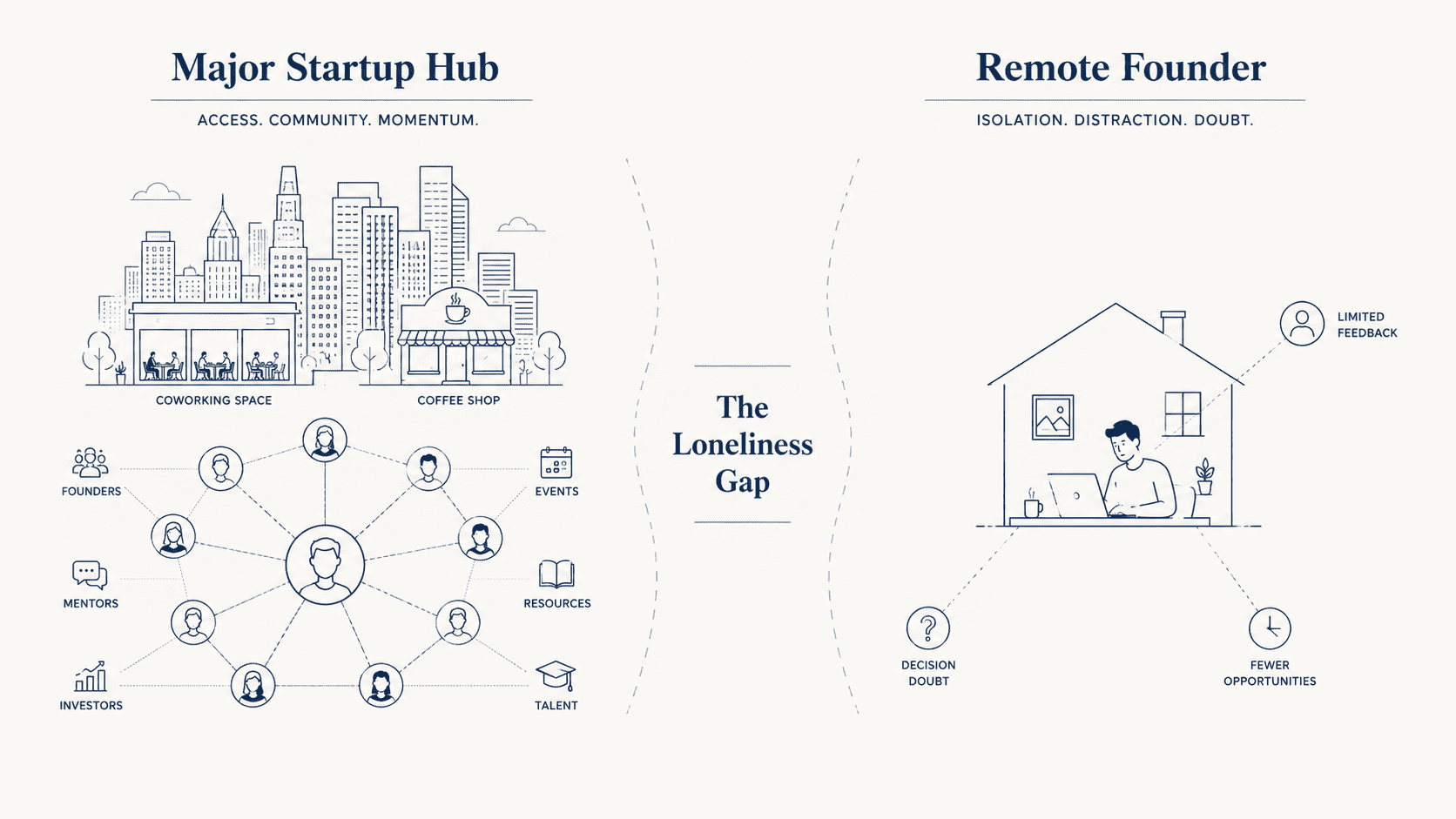
Startup capitals such as London, Manchester, Berlin, and Amsterdam naturally concentrate entrepreneurial talent. Founders in these locations benefit from coworking spaces, networking events, startup meetups, and informal conversations with other ambitious people.
Remote founders often experience the opposite reality.
Many spend weeks working entirely alone. They have freedom and flexibility, but limited access to people who understand customer acquisition, product validation, pricing, positioning, or the emotional challenges of building a business.
This creates what we call the Founder Loneliness Gap — the distance between having access to an entrepreneurial ecosystem and attempting to build in isolation.
Founder loneliness is not simply a social challenge. It is an operational challenge that directly impacts execution speed and business growth.
Why Founder Loneliness Stalls Business Growth
Most founders believe progress comes down to discipline, productivity systems, and knowledge.
While these factors matter, environment often determines whether they are consistently applied.
When founders operate in isolation, several common patterns emerge.
Analysis Paralysis
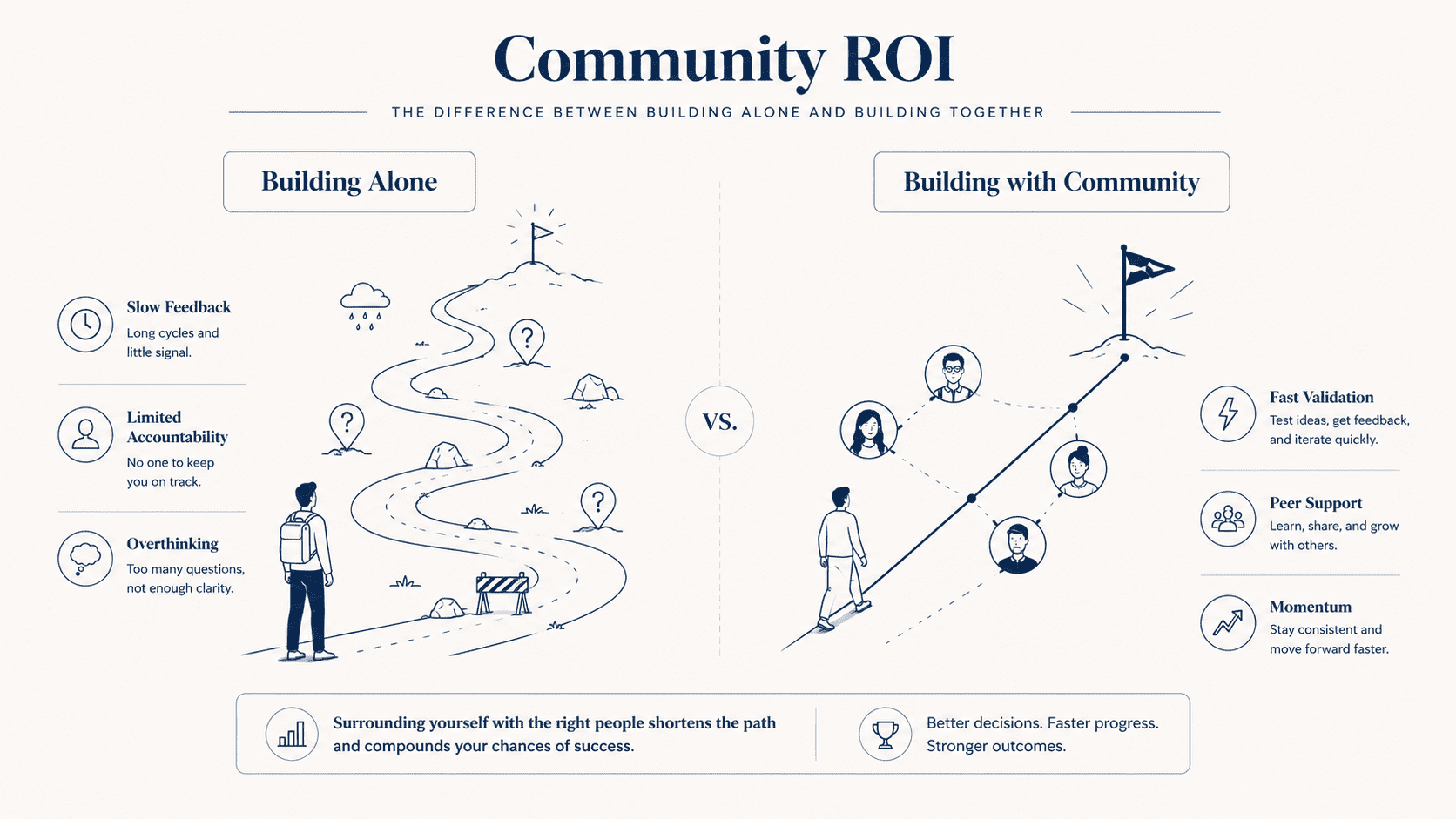
Without peers to challenge assumptions, entrepreneurs often spend too long researching, planning, and refining ideas before taking action.
The result is delayed validation and slower learning.
Reduced Accountability
In traditional workplaces, accountability is built into the environment.
For solo founders, nobody notices when priorities drift or deadlines move.
This makes consistency significantly harder to maintain.
Slower Feedback Loops
Early-stage businesses rely on rapid feedback.
Whether you're testing a landing page, refining positioning, or validating an offer, external perspectives help identify blind spots quickly.
Isolation slows this process.
Increased Burnout Risk
Entrepreneurship already involves uncertainty, setbacks, and emotional highs and lows.
Experiencing these challenges alone can make them feel larger than they really are.
Many founders do not fail because their ideas are bad.
They fail because progress becomes too slow and momentum disappears.
"Working remotely is great, but most entrepreneurial minds are found in busy capitals. I built BFF to be the founder's toolkit I wish I'd had." — Kate, Founder
The Hidden ROI of Founder Communities
Founder communities are often viewed as networking opportunities.
In reality, they can become one of the highest-leverage investments a founder makes.
The right community helps entrepreneurs:
- Validate ideas faster.
- Receive feedback before costly mistakes occur.
- Stay accountable to meaningful goals.
- Learn from founders facing similar challenges.
- Maintain motivation during difficult periods.
- Build sustainable productivity habits.
The greatest benefit is often not knowledge.
It is momentum.
When you regularly interact with people who are launching products, talking to customers, and sharing progress, action becomes the default behaviour.
Bridging the Gap: The Virtual Momentum Hub
The good news is that founders no longer need to relocate to expensive startup capitals to access these benefits.
Modern technology makes it possible to create a virtual version of a high-performing startup office.
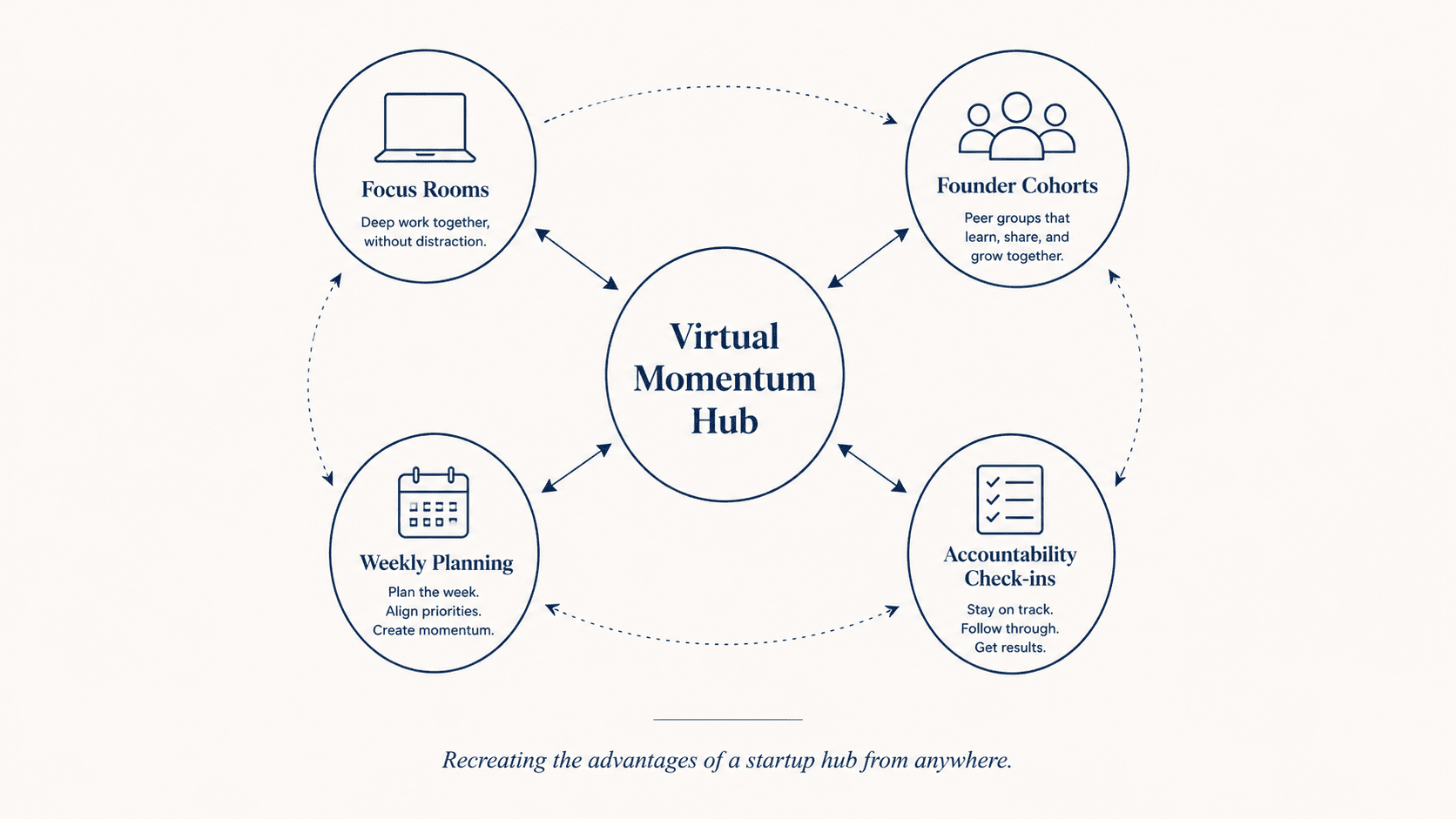
A Virtual Momentum Hub combines several key elements:
Live Focus Rooms
Structured deep-work sessions that create social accountability while minimizing distractions.
Founder Cohorts
Small groups of entrepreneurs who share goals, challenges, and progress over time.
Weekly Planning Sessions
Dedicated time to review priorities, identify blockers, and commit to next actions.
Accountability Systems
Regular check-ins that transform intentions into measurable progress.
AI-Guided Reflection
Tools that help founders clarify priorities, identify patterns, and maintain focus on high-impact work.
Together, these systems recreate many of the advantages traditionally available only within startup ecosystems.
Building a Successful Business From Anywhere
The future of entrepreneurship is increasingly distributed.
More founders are choosing quality of life, affordability, and flexibility over relocating to major capitals.
This shift creates tremendous opportunity.
However, successful remote entrepreneurship requires intentionally replacing the support systems that startup hubs naturally provide.
The most effective founders do not build entirely alone.
They build with structure.
They build with accountability.
And they build within communities that help transform ideas into consistent action.
Key Takeaways
- Founder loneliness is a business challenge, not just a social challenge.
- Isolation can reduce accountability, slow validation, and increase analysis paralysis.
- Strong founder communities accelerate learning and execution.
- Virtual focus rooms and founder cohorts can replicate many benefits of startup hubs.
- You do not need to live in a major city to build a successful business, but you do need a supportive environment.
Frequently Asked Questions
What is founder loneliness?
Founder loneliness refers to the social and professional isolation many entrepreneurs experience when they lack peers, accountability, and regular opportunities to discuss business challenges.
Why is founder isolation harmful for business growth?
Founder isolation can reduce accountability, slow feedback loops, increase overthinking, and make it harder to maintain consistent execution.
How can remote founders stay motivated?
Remote founders often benefit from accountability groups, founder communities, coworking sessions, focus rooms, and regular progress reviews.
Do I need to move to a startup hub to succeed as a founder?
No. While startup hubs offer natural advantages, virtual communities and structured accountability systems can provide many of the same benefits regardless of location.
References
- Business Founder Fit: Founder insights on accountability, founder loneliness, and sustainable entrepreneurship.
- Nielsen Norman Group: Research on user behaviour, engagement, and digital productivity.
- Academic research on social accountability and goal achievement: Evidence linking accountability structures with improved follow-through and performance.