The Science of Peer Pressure: Why Peer Accountability Wins Over Self-Discipline
Business Founder Fit
April 23, 2026
SUMMARY
- The Willpower Fallacy: Relying solely on self-discipline is a high-risk strategy for solo founders due to the lack of external hierarchy.
- Positive Peer Pressure: Social stakes create a 'commitment contract' that significantly increases goal completion rates.
- The ROI of Consistency: Strategic consistency driven by peer groups leads to the 702-1,389% ROI seen in top-performing B2B campaigns.
Beyond Self-Discipline: The Accountability Gap
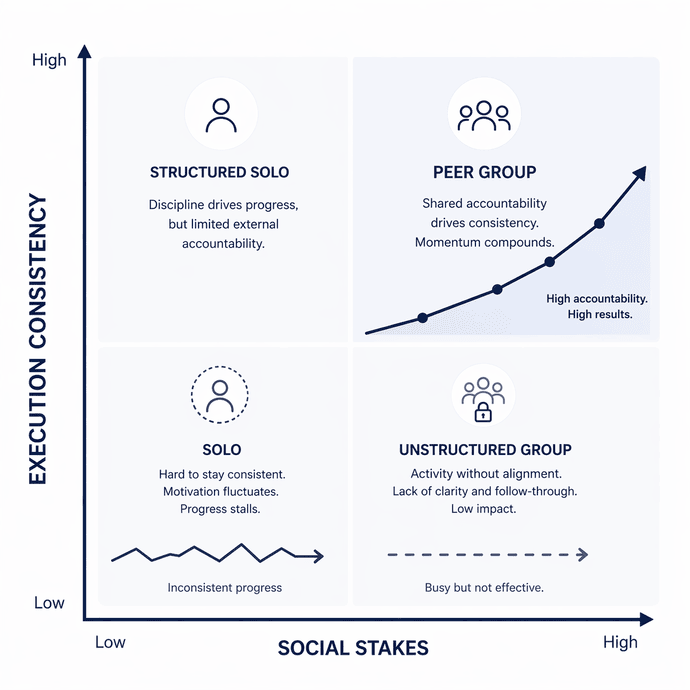
Many aspiring founders believe that success is a matter of pure willpower, but the 'accountability gap' is the primary reason most solo ventures stall. In a traditional office, the hierarchy provides a natural pressure to perform; for a solo founder, that pressure must be intentionally manufactured. Positive peer pressure acts as a functional replacement for the 'boss,' providing the external stakes necessary to bypass internal resistance.
Why Peer Groups Outperform Solo Hustle
Research into B2B growth shows that consistency is the strongest predictor of success, with thought leadership groups delivering a 748% ROI over three years. Peer accountability groups provide two critical functions: validation and social stakes. When you share your 7-day sprint goals with a group of 15 other founders, the psychological cost of failing to execute becomes higher than the effort required to do the work.
"Working for yourself is a path to self-actualisation, but it requires a community of peers on a similar path to avoid losing your mind in the messy start-up phase." - Kate, BFF Founder.
Implementing Social Stakes in Your Workflow
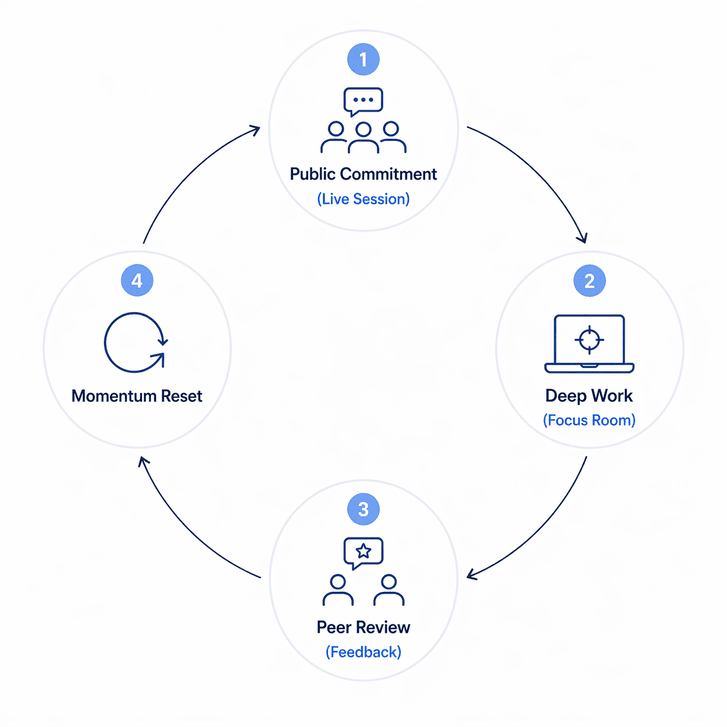
To turn your idea into progress, you must move from 'thinking' to 'acting' by joining live planning and execution blocks. These sessions offer real-time feedback and ensure you are working on high-impact revenue tasks rather than 'digital mulch'. Strategic internal linking between your goals and your peer group's feedback creates a 'Topical Authority' for your business operations.
Transitioning from Freelancer to Founder
For freelancers moving toward productized services, peer pressure is essential to stop the habit of 'trading hours for dollars'. By adhering to a structured Weekly Momentum Plan vetted by a community, you can maintain the focus needed to build scalable assets. This level of strategic execution is what separates those who build 'pages' from those who generate 'pipeline'.

Key Takeaways
- Ditch the Willpower Strategy: Use external systems to guard against decision fatigue.
- Leverage Social Stakes: Publicly commit to 7-day sprints in live founder sessions.
- Focus on High-ROI Activities: Prioritize tasks that search engines and peers recognize as authoritative.
Frequently Asked Questions
Why is peer pressure good for founders? Positive peer pressure creates social stakes that increase commitment and help founders overcome the isolation of remote work.
What are 'social stakes'? Social stakes are commitments made to a peer group that make the psychological cost of inaction higher than the cost of execution.
References
- Business Founder Fit: Research on founder cohorts and the 'willpower fallacy'.
- Whitehat SEO (2026): B2B Guide to Keyword Research and strategic ROI data.
- First Page Sage (2025): Comprehensive study on B2B SEO ROI by industry.
- Ranking Raccoon (2026): Insights on building niche relationships and peer validation.